Ever since I picked up The Gulag Archipelago in 7th form, I’ve had a strong interest in communism and people’s lives under communist regimes. When I learned about Louis XIV’s extensive use of music as propaganda, and his dictation of the French national style, I immediately thought “Well, that sounds famliar…”
On the
surface, things seem very similar. Both
Louis XIV and Stalin used music to glorify themselves and had an unnatural
level of control over the arts. Louis
created academies to regulate the various arts, and Stalin had the Union of
Soviet Composers, which musicians had to join. Both were determined to create a national
style which could represent their country at home and abroad, and laid down a
number of rules to make sure of it. Potential
opera plots had to be run past Louis XIV, and neither ruler allowed anything
subversive to be performed. But claiming
that Lully’s career mirrored Shostakovich’s is laughable. Why?
The first
reason is that Louis XIV and Stalin used music for different purposes. To understand these reasons, we have to first
look at the political situations in the two countries.
After the Bolshevik Revolution of 1917, life was supposed to improve
for Russia’s lower classes. And to a
certain extent, it did, with Lenin introducing new reforms such as the NEP,
which stabilized the economy and allowed Russia to recover from the post-war
famine. Education was made accessible to
everyone, and immunization eradicated many diseases. But when Stalin took control after Lenin’s
death, life took a downward turn. The
collectivization of farms caused widespread starvation, corruption was rife,
and brutal campaigns were carried out against anyone Stalin didn’t like.
The Party’s policies had failed.
But they refused to see it, and projected an idealized image of Russia and its satellites
as a sort of happy workers’ paradise, where everyone was equal and wanted for
nothing. They saw themselves as
liberators and saviours, ignoring the fact that they had become the new
oppressors.

The fantasy
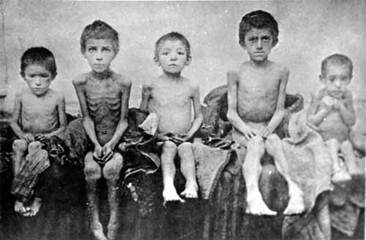
The reality
Music, under communist rule, was meant to represent the supposed life and struggles of the common people. The only struggles allowed, though, were state-approved ones – against capitalism, the decadent West, former landlords, and so on – nothing that criticized the Communist Party. So, again, it was a depiction of a false reality.
The situation in France was rather different. While many of the French lived in poverty,
they didn’t have to pretend they didn’t, for one thing. And they had a great deal more freedom to
criticize the king. Louis XIV, like most
monarchs, didn’t really care much about the lower classes, and didn’t act as if
he did.
But my focus in France is on Versailles, where most of the music we
call “French Baroque” was written and performed. Music served to glorify Louis XIV, both at
home and abroad. Composers wrote songs
flattering him, prologues about the king were tacked onto the beginning of
operas, and praise of the monarchy was the metaphor of the day. But most of the music was not directly about
Louis – as he was patron of the arts, any good, French music written under his
centralized system was still propaganda.
Music was also one of the ways in which Louis kept his nobles
entertained and out of trouble. Most of
it was written just to be heard and enjoyed, not for any underlying political
purpose. Lambert’s Par mes chants tristes et touchants wasn’t scrutinised for
dissatisfaction with Louis XIV’s reign – it was listened to simply as an
expression of human sadness.
Stalin had far more control over the arts than Louis XIV did
(literally everything in the Soviet Union was micromanaged by the Party), and
the Soviet composers had more to lose by stepping out of line. After his second denunciation, Shostakovich
was thrown out of the Leningrad Conservatory, and most of his works were
banned. At times he feared for his life,
and the constant threat of Stalin’s infamous gulags hung over his head. Any perceived “Western” influence would send
Stalin into a rage.
Compare this with France – when Charpentier’s opera Médée was performed, there was a
terrible fuss about the Italian elements in it.
Yet nothing happened to Charpentier.
Although Louis XIV took a very firm stance against anything Italian, he
never put it into law or made threats.
He didn’t even do anything about the small group of musicians in Paris
that met to play the latest Italian pieces.
And as for music that openly mocked him – when the Comédie-Italienne went
too far, did he execute the actors? Send
their families to prison? Oh, he closed
down the theatre and threw the Italians out of court. How dreadful.

The acceptable Soviet style of composition included simple melodies,
preferably based on folk tunes, and traditional harmonies. Nothing that was progressive, or avant-garde,
or “bourgeois”, ie, complicated. This
stifled creativity and prevented anyone from developing new styles. Shostakovich waited until after Stalin’s
death to publish a good number of pieces, such as From Jewish Folk Poetry.
The French had limitations, too.
An abundance of ornamentation, rhythmic fluidity, flexible metre, and
vocal writing based on spoken French rather than strict rhythms were the main
ones. Yet the French composers were not
limited to the same extent as the Soviets, for two important reasons.
The first is that the French Baroque style was developed by a composer, not a
politician who only wanted to shore up his government. Under Lully, a lot of excellent music was
composed. Yes, other French composers
were expected to conform to his approach, and that lack of freedom meant that a
lot of wonderful music was never written.
Or maybe they would have just conformed to the Italian style instead. Prior to the Romantic era, individualism
wasn’t as important, and a uniformity of style particular to time and place
often prevailed (the Italians had as many "rules" as the French, even if they were unspoken). At any rate, the French
composers could write within the rules and still produce good music.
The second reason is that the Soviets had it very carefully spelled
out for them what was allowed, whereas for the French, the restrictions were on
what they COULDN’T do – that is, write in the Italian manner. So the French could still experiment or try
new things, although generally it was only Lully who did so. Even sticking to Lully’s style, there was a
lot of room for creativity.
A final point – Shostakovich, living and mixing with the “common
people”, saw first-hand their oppression and trials living under Stalin’s rule. One of his goals as an artist was to give
voice to their plight. He said about his
Eleventh Symphony, written just after the Hungarian Revolution, “It’s about the
people, who have stopped believing because the cup of evil has run over.” Lully, on the other hand, lived a life of
luxury and wasn’t interested in those who didn’t. If he had written operas about the persecution
of the Protestants, or the expoitation of the peasants, he would have quickly
fallen from favour and been sacked, at the very least.
The number of differences I’ve listed aren’t that many, really. Louis XIV and Stalin were very alike. Yet I think the differences are greater than
the similarities, and it’s usually the reasons behind those similarities that
are different – and it’s the whys
rather than the whats that are most important.

No comments:
Post a Comment